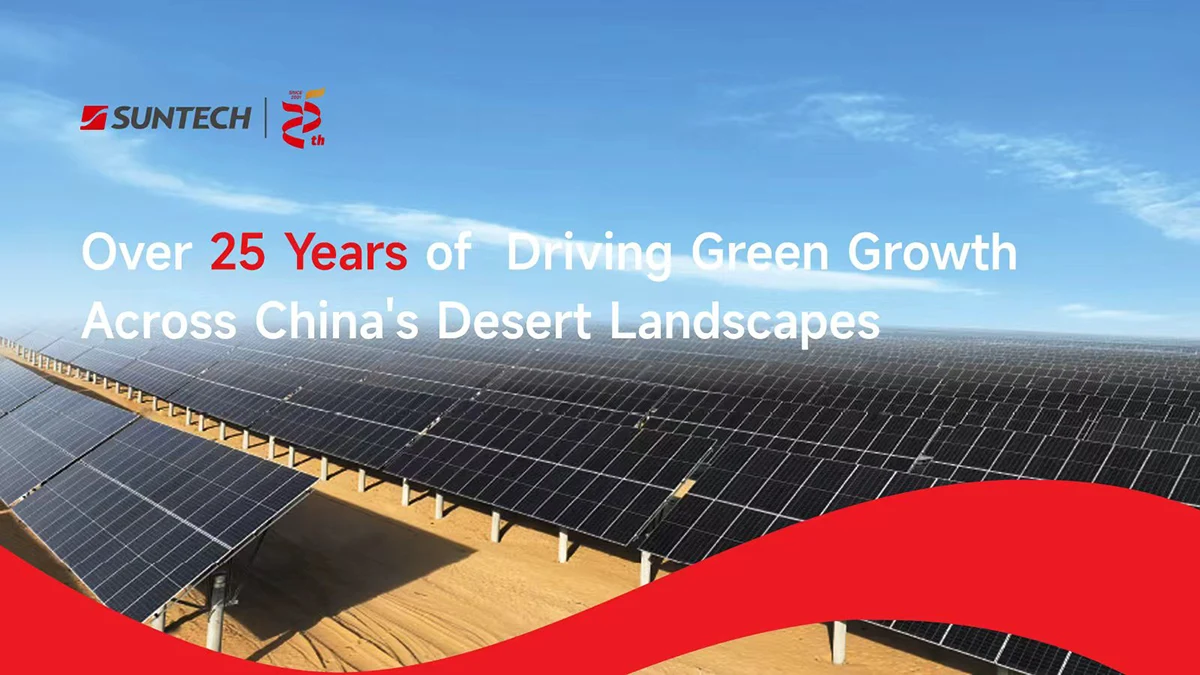
Amid the continued advancement of China’s Three-North Shelterbelt Program and the nation’s carbon neutrality goals, Suntech is demonstrating how solar technology can support both renewable energy development and environmental recovery—creating a sustainable model that combines power generation, sand control, and ecosystem restoration.
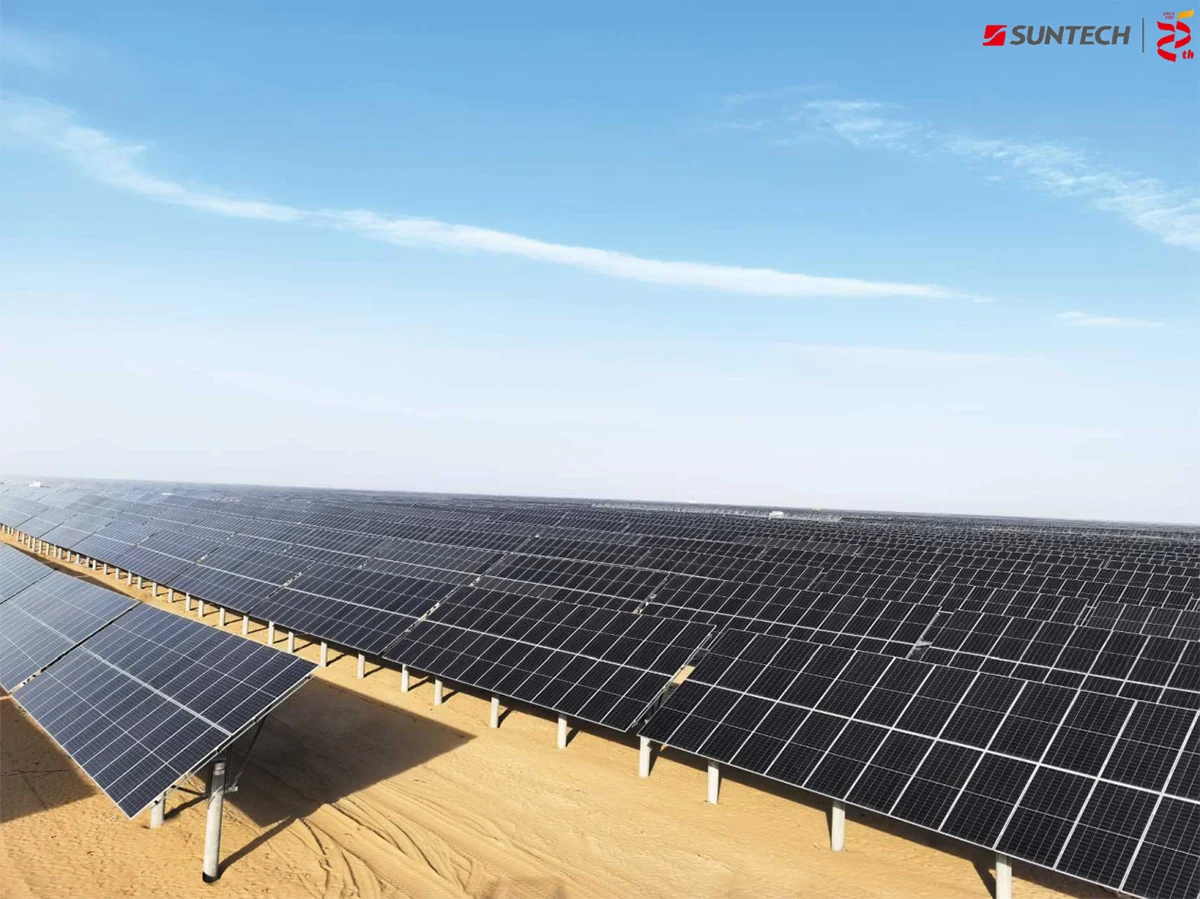
Unlocking Desert Value
China’s desert, Gobi, and degraded sandy regions offer abundant solar resources and vast land availability, making them ideal locations for large-scale renewable energy development. At the same time, these areas have long faced challenges such as desertification, soil erosion, and limited land utilization.
Today, innovative approaches including photovoltaic desert restoration and integrated solar-plus-storage solutions are reshaping these landscapes. What were once considered barren and unproductive areas are increasingly becoming centers of renewable energy generation and ecological renewal.
For 25 years, Suntech has focused on PV innovation and application-driven solutions for diverse operating environments. Through high-efficiency modules, customized project solutions, and lifecycle support services, the company is helping transform desert regions into valuable assets that deliver environmental, economic, and social benefits.
Powering Desert Transformation
Across China’s desert and Gobi regions, Suntech’s technologies are supporting projects that combine clean energy generation with ecological improvement.
In Inner Mongolia’s Ulan Buh Desert, the Dengkou Guolong Hongyun 100MW Solar-Storage Ecological Integration Project combines photovoltaics, energy storage, ecological restoration, and desert-based industries. Powered by Suntech Ultra V bifacial double-glass modules, the project helps reduce wind erosion, minimize soil moisture loss, and restore fragile desert ecosystems while generating more than 181 million kWh of clean electricity annually.
In the wind-sand belt of Xilin Gol, Inner Mongolia, the Sunite Left Banner Manglai Open-pit Coal Mine Photovoltaic Project is revitalizing former mining land through renewable energy development. Supported by Suntech’s high-reliability modules, the project contributes to both land rehabilitation and the transition from traditional resource extraction to clean energy generation.
In Zhangjiakou, Hebei Province, the Zhangbei Hengfeng 500MW Utility-Scale Photovoltaic Project showcases the potential of large-scale solar deployment in harsh desert environments. Equipped with Suntech high-efficiency monocrystalline modules, the project is designed to withstand extreme cold, strong winds, and heavy snowfall while delivering reliable clean power to the Beijing-Tianjin-Hebei region.
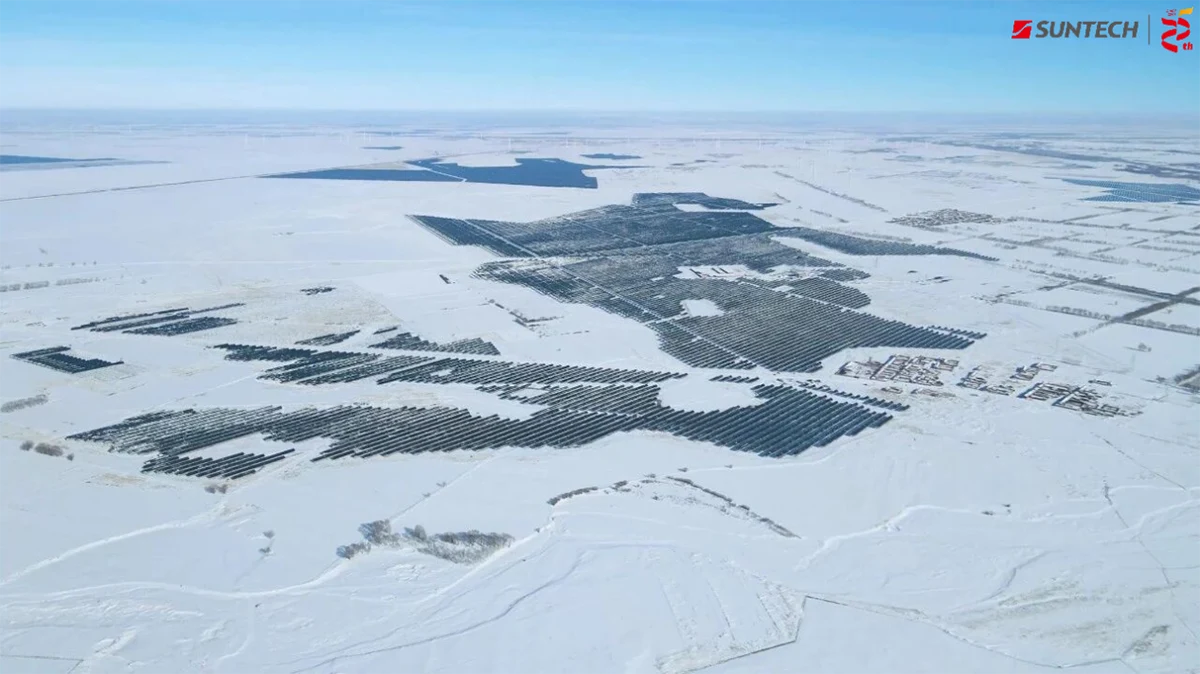
Built for Harsh Environments
Desert photovoltaic projects face demanding operating conditions, including intense UV radiation, dust accumulation, strong winds, extreme temperature fluctuations, and salt-alkali corrosion. To address these challenges, Suntech continues to develop advanced PV technologies specifically engineered for harsh environments.
Built on Suntech’s advanced N-type TOPCon platform, the UltraT 3.0 Quarter-Cut modules deliver low degradation, excellent low-light performance, and enhanced long-term reliability. The Quarter-Cut cell design reduces internal electrical losses while minimizing the risk of microcracks caused by wind-induced vibration and extreme temperature variations.
Combined with advanced fine-grid printing and high-density shingled packaging technologies, the modules offer outstanding resistance to aging, dust, and salt-alkali corrosion. Their high bifacial power generation capability further maximizes solar energy utilization in desert environments, helping improve project performance and long-term investment returns.
Looking ahead, Suntech will continue expanding the boundaries of desert PV applications through ongoing technology innovation and integrated solar-plus-storage solutions. By supporting ecological restoration and renewable energy development across China’s desert regions, the company remains committed to advancing the country’s low-carbon transition and building a more sustainable future.
 English
 中文
中文